Home breadcrumb spacer Programs breadcrumb spacer Livelihoods breadcrumb spacer

Urban Refugees

Aamina* came to Eastleigh, a sprawling slum in Nairobi, Kenya, after her husband was killed by the government in Ethiopia. Fearing for her family’s safety, Aamina escaped across the border with her mother and her two young children. She decided to settle in the city because she feared that Kenya’s refugee camps lacked economic opportunities and the health services her ailing mother depends on. But like millions of other refugees living in urban environments today, she struggles to provide for her family, relying on whatever means and skills she can.

Our Work

Half of the world’s 10.5 million refugees now reside in cities. They often have few assets, limited support networks, and are constrained by legal, cultural and linguistic barriers. To date humanitarian efforts have focused primarily on camp-based refugees, leaving the needs of urban refugees poorly understood.

The Women’s Refugee Commission is conducting research to assess the situation urban displaced poor face and to develop guidance to improve their lives.  We are making their self-reliance and protection a priority.

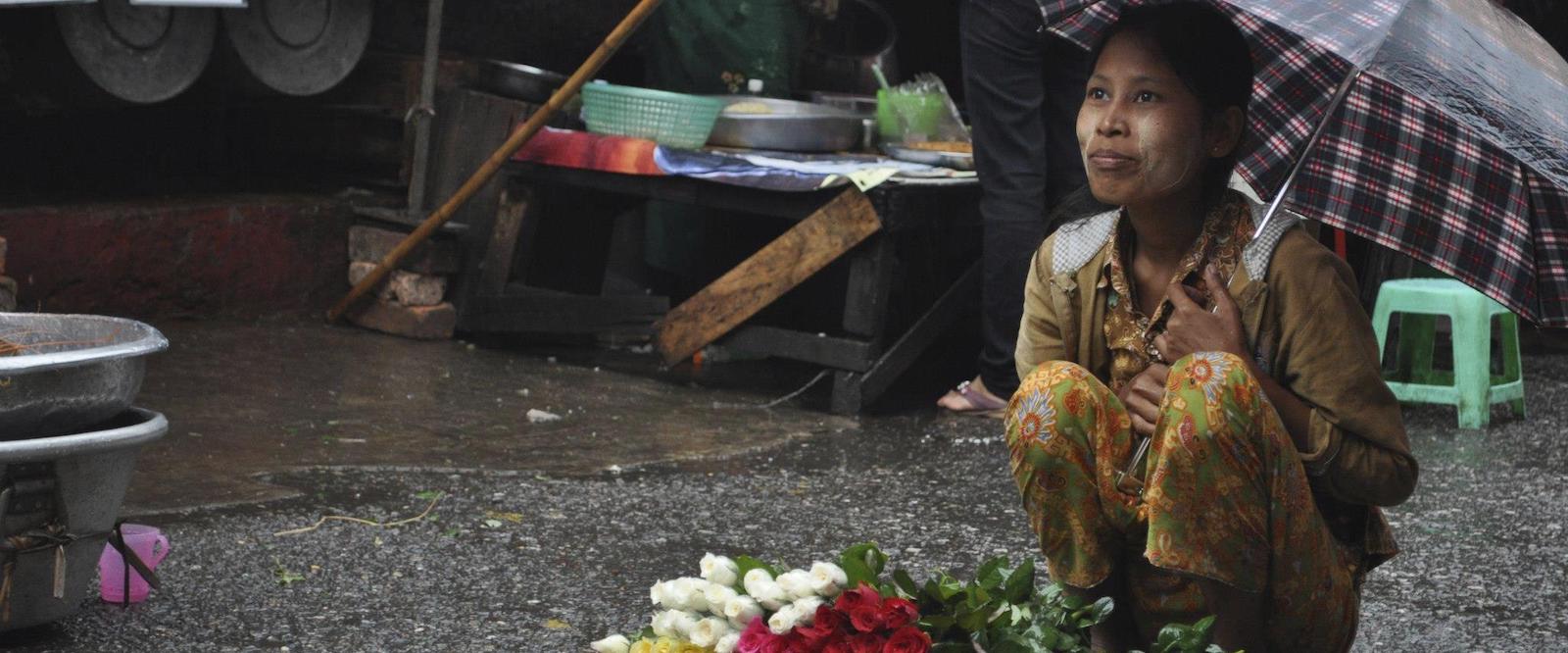
Urban refugees face multiple challenges to achieving self-reliance; nevertheless, they are industrious and hard-working. They want to stand on their own two feet, to support their families, educate their children and build a better future. Many come to cities looking for work, better opportunities and security. However, they often do not have access to basic services, such as healthcare, education, or credit. They lack the necessary legal rights to participate in the formal economy and are often pushed into the informal sector. There, they face extortion, exploitation, abuse and arrest. With few options, women and girls, in particular, often rely on risky activities to survive, such as commercial sex work. Youth are rarely in school or employed, which has resulted in a lost generation.

The Women’s Refugee Commission conducts desk and field research to advocate for policies and practices that will make a difference in the lives of urban refugees. We go into the slums, to learn of needs directly from displaced women, men and youth. We go into the markets to learn of the challenges and opportunities of doing business. We use an evidence-based approach to design innovative, market-based livelihoods programs, and ensure that refugees gain skills in non-saturated markets. We then test these models within local marketplaces, monitor the results and share what we’ve learned through reports, trainings, practical tools and advocacy.

Read our new report on urban refugees in Kampala, Uganda, The Living Ain’t Easy.

*Name changed for anonymity

Urban Refugee Reports

Through desk research, expert interviews and field assessments—in consultation with refugees about their own needs—the Women’s Refugee Commission builds an evidence base and develops practical guidance. Read our reports on the challenges of and opportunities available to urban refugees.

  • The Livin’ Ain’t Easy: Urban Refugees in Kampala (March 2011)
    This report, based on interviews with 281 refugees and service providers, highlights the constraints and opportunities to improve the livelihoods of urban refugees in Kampala, Uganda. The report is a part of a larger one-year study to understand the economic coping strategies, protection concerns and the local economic environment of urban refugees.
  • Desperate Lives: Urban Refugee Women in Malaysia and Egypt (Published on Forced Migration Review Issue No. 34)
    The future of displacement is clearly urban – and clearly fraught with challenges. The Women’s Refugee Commission has undertaken research into the risks and challenges confronting refugee women in urban areas- as well as the opportunities they gain – as they seek to provide for themselves and their families in settings where international assistance is minimal.
  • Building Livelihoods: A Field Manual for Practitioners in Humanitarian Settings (May 2009)
    Download our manual on livelihoods in humanitarian settings, developed to provide practitioners with usable information and helpful tools in designing and implementing effective livelihood programs.
  • Earning Money/Staying Safe: The Links Between Making a Living and Sexual Violence for Refugee Women in Cairo (July 2008)
    This report highligths challenges facing  refugee women living in Cairo,  identifies promising livelihood interventions and makes recommendations on how to improve livelihood opportunities for women, in ways that could also mitigate their vulnerability to gender-based violence.
  • Desperate Lives: Burmese Women Struggle to Make a Living in Malaysia (May 2008)
    Based on a field assessment in Kuala Lumpur,Malaysia, this report highlights Burmese refugee women’s economic coping strategies and how these affect their vulnerability to gender-based violence.

-