
Today, the Trump administration put a new policy into effect, potentially impacting billions of dollars of US foreign assistance and placing millions of vulnerable women and girls at risk.
The so-called Protecting Human Flourishing in Foreign Assistance policy (PHFFA), introduced in January 2026, expands upon the Mexico City Policy (or Global Gag Rule), which was reinstated by the Trump administration one year ago. The Mexico City Policy prohibits US global health assistance funding to foreign non-governmental organizations (NGOs) that provide abortion services or information—even when those services are legal in those countries or funded independently of the US.
The new PHFFA policy, consisting of three new rules, drastically expands the Mexico City Policy with new restrictions on US funding. This has direct and dangerous implications for women and girls in humanitarian and displacement crises. First, the PHFFA policy will prohibit funding for a wider range of programs and activities than the Mexico City Policy, including those that “provide or promote abortions” or promote “discriminatory equity ideology” or “gender ideology.” This includes abortion education, diversity and racial justice activities, and gender-affirming care. Worryingly, restrictions on DEI (diversity, equity, and inclusion) could affect the ability of organizations to target aid to specific populations in need, since humanitarian responses routinely direct resources based on characteristics like gender, religion, or national origin.
Second, unlike in the Mexico City Policy, these restrictions aren’t just applied to US global health funding, but rather to all US non-military foreign assistance budgets (including humanitarian assistance) controlled by the US State Department. This means that previously unaffected areas like education programs are now at risk. Finally, the restrictions have also been expanded to a wider range of partners, impacting funding given to US NGOs, multilateral organizations (including UN agencies), foreign governments, and foreign NGOs.
The PHFFA policy comes on the heels of an already devastating blow to the humanitarian system: In 2025, the US cut over $40 billion in foreign aid, including more than $10 billion in humanitarian assistance, throwing an already overstretched system into chaos. Now, by conditioning virtually all remaining US foreign aid on compliance with restrictions around reproductive health, gender programming, and anything that the administration deems related to diversity and equity, the policy forces organizations into an impossible choice at a time of severe resource scarcity. They can accept what little funding from the US remains and abandon their core services, or they can refuse it and lose the resources they need to operate at all.
We already have a stark preview of what this means for women and girls in humanitarian crises. Following last year’s aid cuts, WRC documented clinic closures, shuttering of women and girls’ safe spaces, and the near-collapse of hundreds of women-led organizations that serve women and girls in humanitarian settings. These disruptions have caused the deaths of women in Afghanistan, Ethiopia, and Yemen—while the full extent of the impact remains to be seen. Past versions of the Global Gag Rule consistently showed that even organizations not directly bound by the policy restricted their services out of fear, meaning the chilling effect extends far beyond those who receive US funds directly.
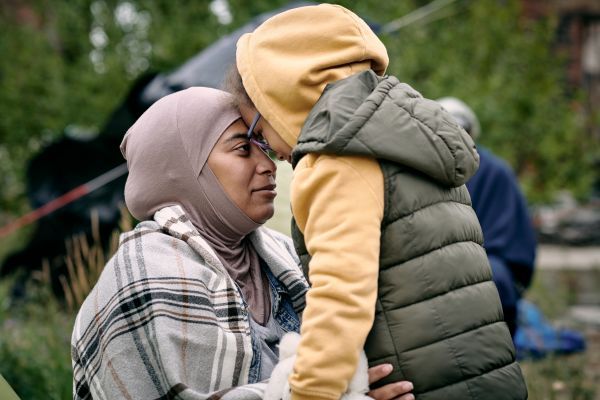
In humanitarian crises, there are no backup options. For millions of displaced women and girls, aid-funded programs and services are often the only support available. When these close, girls drop out of school, survivors of violence go without support, and women give birth without skilled care. Policies that compromise these systems don’t just limit choice—they cost lives.
So what does actually protect human flourishing? Decades of evidence from humanitarian settings points to a clear answer. Investing in women and girls—through access to quality education, sexual and reproductive healthcare, protection from violence, and economic empowerment—consistently produces some of the strongest documented health and development outcomes. When girls stay in school, when women can access contraception and maternal care, and when survivors of gender-based violence receive support, entire communities become more stable, healthy, and resilient.
Congress must push back against the implementation and expansion of the PHFFA policy. Members of Congress must exercise their oversight powers to ensure that recently appropriated funds for reproductive health and family planning, gender-based violence, women’s economic empowerment, and women, peace, and security are spent in accordance with the fiscal year (FY) 2026 National Security, Department of State, and Related Programs (NSRP) Appropriations Act.
Far from protecting human flourishing, these new rules will reverse decades of progress, endanger lives, dismantle essential support systems, and leave women and girls around the world at greater risk of violence, abuse, exclusion, and health complications. If we have learned anything from the past year, it’s that rapid and drastic restrictions to humanitarian funding will cost lives.