
The news of a ceasefire agreement between the US and Iran should come as a relief. For many, it has brought much-needed respite after 40 days of war.
Yet for the millions of civilians whose lives have been upended by the wars in Iran and Lebanon, including countless women and girls facing fallout across the region, this week’s ceasefire agreement has not meant an end to the violence.
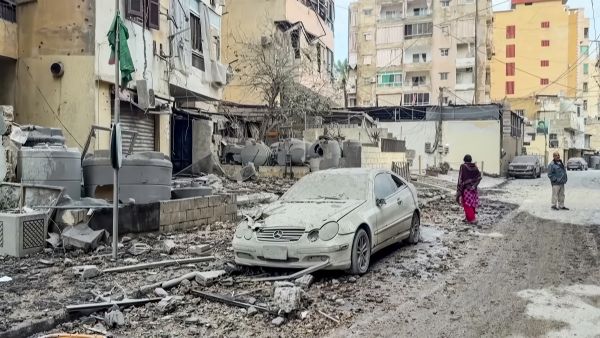
Most glaringly, within hours of the deal’s announcement, Israel launched more than 100 air strikes across Lebanon, killing hundreds of people in the deadliest day for the country since the war began. As one partner told us yesterday:
“The violence today is extreme. …Over a hundred strikes in less than ten minutes, everywhere. I narrowly escaped several. It’s terrifying and beyond anything I’ve seen—without any warning, across multiple streets and areas.”
Less visible are the millions of people in Iran—many of whom are displaced, traumatized, and grieving—who are grappling with the ongoing and long-term structural violence caused by the war. Furthermore, millions of others across the region are still suffering and at risk of violence and displacement.
When the war was launched on February 28, President Trump promised the people of Iran that “the hour of [their] freedom is at hand,” insisting that the war was “America’s help” to “seize control of [their] destiny.” Yet in the 40 days of the conflict, the war instead unleashed a multilayered humanitarian catastrophe, the impact of which has been compounded by the loss of programs for the protection and assistance of women and girls. Many of these programs were forced to shutter due to drastic humanitarian funding cuts in 2025, primarily by the US government.
Since the war began, more than 2,200 people have been killed in Iran and Lebanon; more than 3.2 million people in Iran and more than 1.2 million people in Lebanon have been displaced; and women, girls, and refugees have faced devastating violence and insecurity across the region:
- On the first day of the war, 168 girls were killed by a US airstrike on the Shajareh Teyyebeh elementary school in Iran as they sat down for their morning lessons.
- Refugees in Iran have reported job losses, restricted food access, rising protection needs, and inaccessible medical care, including for pregnant women.
- In Lebanon, UNFPA estimates that nearly one quarter of all women and girls have been displaced, 13,500 of whom are pregnant. Ongoing violence has led to the damage or closure of more than 65 health facilities, including the closure of four hospitals with maternity wards.
- Hundreds of thousands of Syrian and Afghan refugees in the region have been forced to flee, many of them returning to Syria and Afghanistan, respectively, further straining overstretched humanitarian operations in both countries.
- Pregnant Syrian refugees, who have escaped from Lebanon to Syria, are experiencing exhaustion, stress, and pregnancy complications, with unpredictable access to care.
- Displacement and overcrowded shelters have led to heightened risks of sexual and gender-based violence, and the UN notes that Syrian and Palestinian refugees in Lebanon are in urgent need of lifesaving assistance.
- The sustained, deliberate, and illegal targeting of civilian infrastructure, including schools, healthcare facilities, and energy infrastructure across the region, has left millions of civilians without the essential systems they need to sustain life.
One women’s rights defender in Lebanon told us:
“What we witness on the ground is far beyond what can be conveyed through screens. On the roads, during halted traffic, I have seen scenes of displacement that are deeply heartbreaking—children with frozen, uncertain eyes, and women carrying what little they could gather of their lives in a single bag. It leaves you questioning: Can a single bag ever replace a home?”
“On a daily living level, the situation has become more difficult due to the economic decline, rising prices, and shortages of certain essential goods, especially those related to children. This increases the daily burden on me as a mother.”
While analyses are already flooding our newsfeeds about the geopolitical implications of the ceasefire agreement, or the extent to which parties to the conflict have achieved their strategic war objectives, we must remember: the cost of war cannot be measured in the price of oil or the movement of tankers. For millions of women and girls, the violent actions of the past 40 days will be felt for weeks, years, or even generations. Displaced women and girls whose homes or neighborhoods have been destroyed will be forced to continue living in unsafe, unstable, or overcrowded environments, where they face risks of economic insecurity, violence, and exploitation. For those who have had family members killed, including partners or children, the trauma will be lifelong. Meanwhile, women and girls in Lebanon live under the ongoing threat of Israeli airstrikes and occupation, while women in Iran continue to struggle for freedom and justice under the rule of an oppressive regime. Across the region, decades of hard-fought gains in gender equality and women’s security are now at stake.
A ceasefire should be a welcome respite, but for many women and girls across the region, it is not enough to bring peace or safety. The world cannot erase the harm of the past 40 days, but this pause presents an opportunity to demand a new course of action—one based on diplomacy, not destruction; on human rights and not constant harm; on upholding international law, instead of violating it; and of meaningfully advancing the rights and leadership of women.