
Because the best research is built on local knowledge and lived experience, WRC partners with local researchers to produce our groundbreaking reports. These researchers often have deeply personal connections to, and unique takeaways from, the work. In this new series, we give them the floor to share their reflections.
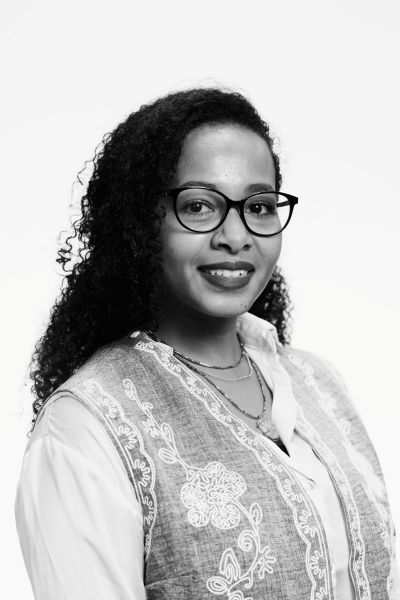
We previously spotlighted researchers Diana Flórez, Oricia Ngenyibungi, and Belal Jahjooh. Today we’re turning to Wala Mohammed, a Sudanese researcher and writer who authored WRC’s report, Futures on Hold, about how war and displacement are impacting young Sudanese women.
Here’s what Wala had to say:
I am personally driven by WRC’s focus on women, particularly those in refugee communities who are often forgotten by policymakers. WRC’s commitment to a trauma-informed approach, which prioritized the research participants and my well-being throughout the research process, was invaluable. Accessing young displaced women in such precarious settings required immense flexibility, and the WRC team met those challenges with grace. Producing the Sudan report as a refugee woman was a dual journey. It was strengthening to serve as an advocate for my community, and it was also deeply moving to document the resilience of women whose stories are too often sidelined.
Young women often navigate distinct realities. Trauma and outsized responsibilities often rob them of the care they need, forcing them to grow up too fast and creating significant obstacles in their journey to adulthood. Being a young woman myself, I felt driven to shed light on how young Sudanese women are navigating displacement in the midst of an ongoing war.
For young Sudanese women, this displacement is often not their first encounter with conflict. Many participants from Darfur and Kordofan reported a cycle of trauma, having lost caregivers to violence in previous years only to face the same devastation again today. This state of limbo has fundamentally halted their transition into adulthood, as their university studies and career aspirations have been replaced by a desperate struggle for survival.
Digital isolation has emerged as a significant hurdle; the loss of mobile devices and the high cost of internet access have cut these women off from vital information and the social support networks of family and friends. While digital services are often overlooked by humanitarian actors, young Sudanese women have demonstrated that connectivity is a critical necessity during displacement. Connectivity is vital for those who have been separated from their families or are searching for partners who disappeared during the conflict.
For young women in Darfur and West Kordofan, conflict has been a lifelong reality, often beginning in childhood. The report illustrates how these prolonged wars have deprived them of essential care throughout their development. A stark indicator of this reality is the educational disparity found in the research: Due to years of interrupted schooling, many young women from these regions are still at the primary school level, making them significantly older than peers from other areas.
Women who were pregnant before displacement have been forced to give birth in camp settings without medical assistance, pain relief, or basic hygiene supplies. Despite these harrowing conditions, these young women maintain a profound commitment to their children’s well-being and their own future aspirations. They consistently express a desire to resume their education as a vital pathway to securing the livelihood opportunities necessary to sustain their families.
Persistent regional inequalities in Sudan, particularly in under-developed regions like West Kordofan and Darfur, remain a primary driver of conflict and war. To break this cycle, the humanitarian system must prioritize the unique needs of young Sudanese women, who are not only the kernel of the nation but also the primary caregivers for future generations. This requires a dual-pronged approach: securing safe, unhindered access to aid in areas facing famine, while holding both the Rapid Support Forces (RSF) and Sudan Armed Forces (SAF) accountable for the targeted obstruction or confiscation of life-saving resources. Furthermore, international actors must engage with all parties to enforce the protection of civilians and end the recruitment and exploitation of youth within displacement settings.
To call the conflict in Sudan a “forgotten war” is a mistake. It is a war sustained by foreign interests. We need to focus global attention on the neo-colonial tactics used by external countries to exploit this crisis for their own gain. The world must stop looking away and start holding these foreign influencers accountable for their role in the ongoing devastation of Sudanese people. Because the systems that drive war in Sudan are tied to global interests, we must recognize that all wars are connected, and our advocacy efforts must be, too.