
“Again and again, I heard stories of women stretching themselves far beyond their capacities, giving their own time, energy, resources, and emotional labor simply to keep their organizations alive and to continue serving others.” -Zainab Chamoun, Lebanese researcher
Last week, we released a joint report with Refugees International, “At What Cost? Women-Led Organizations, Funding Cuts, and the Price of Survival.” It paints a disturbing picture of how women-led organizations (WLOs), which play an essential role in supporting women and girls in crisis settings, have been disproportionately impacted by humanitarian aid cuts. To take you behind the scenes, this week we share insights from three of our research partners, who spoke with women leaders in Honduras, Lebanon, and Sudan.
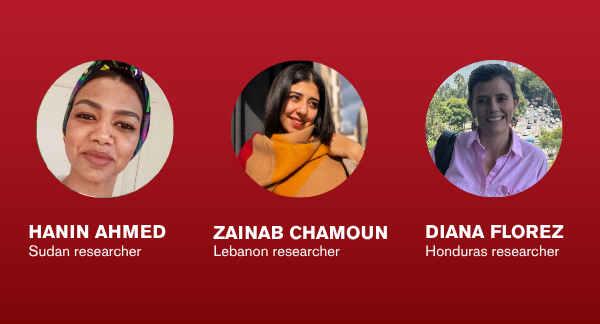
It is through their expert analysis and commitment to amplifying voices of women on the frontlines that we can learn how to steer support where it is most needed. We are already using this report to brief high-level multilateral decision-makers on the need to prioritize women-led organizations in humanitarian contexts, and to make funding more flexible.
Read on for insights from some of our research partners.
LEBANON:
“Across almost every interview I conducted, what stayed with me most was not only the impact of the funding cuts on women-led organizations, but the toll they placed on the women leading them. I found it particularly striking in Lebanon, where organizations have been moving from one crisis to another for years. Despite this constant state of emergency, these women continue to give so much of themselves to sustain their work and support their communities. Again and again, I heard stories of women stretching themselves far beyond their capacities, giving their own time, energy, resources, and emotional labor simply to keep their organizations alive and to continue serving others.”
- Zainab Chamoun, Lebanese storyteller and researcher, based in Lebanon
HONDURAS:
“What struck me most about Honduras is that the funding crisis facing women’s rights organizations is not new—although it has deepened dramatically since 2025. In a country with one of the highest femicide rates in the region, and where the state is too weak or unwilling to respond, women’s rights organizations are often the only protection women have. Yet WLOs in Honduras have rarely been prioritised for humanitarian funding. Even when humanitarian resources do reach the country, they are typically channelled through international NGOs or UN agencies. Again and again, I heard WLO leaders describe selling tamales and coconut bread, taking on consulting work, and contributing half of their own income simply to keep their organizations alive.”
- Diana Flórez, Colombian lawyer, researcher, and policy advisor, based in Costa Rica
SUDAN:
“In places like Sudan, where war has made women and girls incredibly vulnerable, the funding cuts actually solidified woman leaders’ will and level of solidarity. For example, some organizations formed or enhanced partnerships with other women’s networks in the area and started pooling funding. This solidarity is the fuel that allows woman leaders to act, and gives them a purpose for innovation and adaptability to manage the sudden crisis of funding loss.”
- Hanin Ahmed, founder of the Old Omdurman Emergency Response Room and External Relations Officer for Sudan’s Emergency Response Rooms (ERRs) network, based in the US