
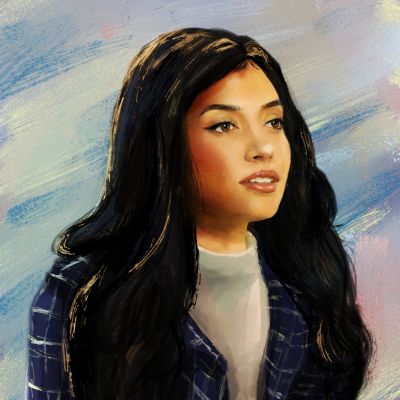
“The Convention is not only about legal protection; it is about preserving human dignity, ensuring access to rights, and creating the conditions for people to rebuild their lives. For women and girls, these protections can mean the difference between vulnerability and opportunity.” – L.V.
2026 marks two historic milestones in the humanitarian sphere: the 75th anniversary of the Refugee Convention, which promises protection for anyone fleeing conflict and violence, and the 65th anniversary of the United Nations Convention on the Reduction of Statelessness, which promises every person’s right to a nationality. We invited L.V., a refugee youth advocate and humanitarian originally from Colombia who is currently based in Ecuador, and who works with the Global Refugee Youth Network, to tell us about how these conventions have impacted her own life, and to weigh in on what the future of protection must look like for women and girls.
I experienced forced displacement when I was 12 years old. At a very young age, I faced many of the challenges that come with being a refugee, particularly the lack of documentation needed to access education, basic services, and other opportunities. My family had to navigate these difficulties largely on our own, as there were very few organizations at the time providing support to help refugees understand and access their rights. Although some limited financial assistance was available during the first months after arrival, the long-term responsibility of rebuilding our lives fell entirely on our family.
For many years, we lived with the restrictions that refugee documentation imposed in a Latin American context. Something as basic as opening a bank account was not possible for us for a long time, creating additional barriers to inclusion and self-reliance. These experiences deeply shaped my understanding of displacement and the gaps that refugees face beyond immediate humanitarian assistance.
At the same time, my lived experience opened opportunities for me to participate in national, regional, and global consultations where I could reflect on the challenges I had personally experienced and bring those perspectives into important discussions. These spaces helped me realize not only the value of refugee leadership, but also that these opportunities should not be reserved for me alone. Opening pathways for other refugee youth to access these spaces, share their perspectives, and influence decisions has become a central part of my commitment at this stage of my life.
Protection is not only about the final status decision but also about the process.
My own experience has shown me that protection is not only about the final decision on one’s asylum, refugee, or permanent residency status but also about the process. For years, my family lived as asylum seekers with documentation that had to be renewed every three months, creating constant uncertainty rather than a sense of security. At one point, even after we had received a positive refugee status decision, authorities decided to review our case again, and there was a possibility that our protection could be withdrawn. Systems can sometimes leave people seeking protection in prolonged uncertainty and fear, worried that they may be forced to return despite having already begun rebuilding their lives. This is why non-refoulement—the international ban on forcibly returning a person to their country of origin if they face protections risks there—is so important: It must be accompanied by fair, efficient, and reliable procedures that provide people with stability and confidence in their future.
I come from a family of many strong women who took responsibility for supporting their families. However, in a refugee context, with all the additional challenges that displacement brings, including limited access to resources and opportunities, everything becomes much more difficult. While women are often offered spaces to develop skills, these opportunities do not always lead to professional growth or real financial security. Many of the courses and trainings available to refugee women focus on activities that keep them working in the informal sector rather than opening pathways to stable, formal employment. In fact, when I think back to the refugee communities I grew up around, I cannot recall anyone who had formal employment with full labor protections and benefits; most people worked informally to survive. Access to higher education also remains out of reach for many displaced women and girls. These experiences have shown me that protection alone is not enough. Women and girls need meaningful opportunities to access quality education, decent work, financial independence, and leadership roles. When they are able to do so, they strengthen not only their own futures but also those of their families, communities, and societies. Self-reliance and participation are essential components of dignity, inclusion, and long-term stability.
Governments should guarantee that displaced women and girls can fully access their rights, including legal documentation, quality education, healthcare, decent work, safe housing, and social security. They should strengthen measures to prevent and respond to gender-based violence, address the specific barriers that limit access to services and opportunities, and ensure that women and girls are meaningfully included in decisions that affect their lives. Beyond protection, governments must invest in pathways to self-reliance and recognize displaced women and girls as leaders, contributors, and agents of change whose experiences and perspectives are essential to building more inclusive and resilient communities.
The 1951 Refugee Convention is not only about legal protection; it is also about human rights and dignity.
The 1951 Refugee Convention remains one of the most important international instruments for protecting people forced to flee their homes. At a time when displacement is at record levels globally, its principles are more relevant than ever. The Convention is not only about legal protection; it is about preserving human dignity, ensuring access to rights, and creating the conditions for people to rebuild their lives. For women and girls, these protections can mean the difference between vulnerability and opportunity. As someone who has worked closely with displaced youth and refugee communities, I have seen how access to rights, education, and opportunities can transform lives and strengthen entire communities. Upholding the Convention is a shared responsibility and an investment in a more just, inclusive, and humane world.