
“Displacement disproportionately shatters women. When a woman is stripped of her legal identity, she loses her financial independence, her safety, and her agency over her own body and future.”– Rasha Al-Tabshi
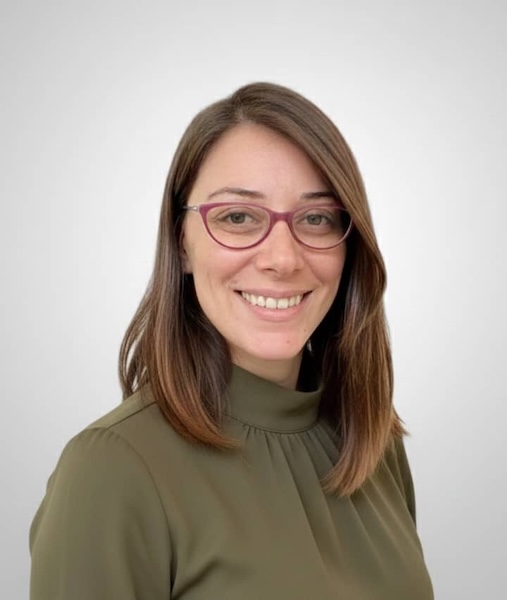
2026 marks two historic milestones in the humanitarian sphere: the 75th anniversary of the Refugee Convention, which promises protection for everyone—including women and girls—fleeing conflict and violence, and the 65th anniversary of the United Nations Convention on the Reduction of Statelessness, which promises every person’s right to a nationality. We invited Rasha Al-Tabshi (a journalist, feminist researcher, and the Executive Director of Warsheh Team in Syria, a coalition member of the Global Campaign for Equal Nationality Rights, housed at WRC) to tell us about how these conventions have impacted her own life, and to weigh in on what the future of protection must look like for women and girls.
My name is Rasha Al-Tabshi. I am 45 years old and a graduate of the Faculty of Journalism. I worked as a professional journalist and managing editor in Syria from 2001 until 2012. Today, I reside and work in Germany, but my journey to safety was marked by an 11-year battle for legal recognition, dignity, and basic human rights.
When the Syrian revolution began in 2011, my brother, a small group of friends, and I engaged in humanitarian relief, securing medical supplies for displaced people fleeing bombardments in Aleppo. Under the Assad regime, providing medicine was classified as a “terrorist offense.” One of our close colleagues was arrested and subsequently killed under torture in detention. By August 2012, as the danger to my family escalated, we fled Aleppo and crossed the border into a neighboring county (whose name I am not revealing for security reasons); the border crossing was at that time managed by the opposition. We initially thought our displacement would be temporary.
In our host country, there was no comprehensive refugee protection system at the time, so I relied on a temporary residency visa, which I renewed annually. By 2014, my work with the Syrian opposition required international travel, and I held a valid European visa. My nightmare began during one of these trips, when I was subjected to a xenophobic assault in my host country’s airport by an airline employee who deliberately ripped my Syrian passport and denied my request to call the police. I was able to re-enter my host country afterward only because my temporary residency visa was still valid.
The destruction of my passport and the systemic refusal to grant me temporary protection or humanitarian papers froze my life. Because of this, my husband and I could not legally register our marriage in our host country (and we couldn’t do it in Syria due to being wanted by security forces). This legal limbo impelled us to make the decision not to have children. Because Syria’s nationality law denies women the right to pass nationality to their children born abroad (and in all but the rarest circumstances, denies them the right to pass nationality even to their children born inside Syria), our lack of a marriage certificate meant any children would also be unable to secure Syrian nationality from their father. We refused to bring stateless, undocumented children into a world that would deny their existence.
In early 2015, I discovered my residency had been arbitrarily canceled. I was unlawfully detained for three days in a foreigners’ removal center. I was denied access to a lawyer, intimidated, and pressured to sign a “voluntary return” form to Syria. When I refused, I was subjected to a deeply humiliating and punitive strip-search. I was only released after a British journalists’ defense organization intervened and secured legal counsel for me.
For the next eight years (2015–2023), my life in my host country became an underground struggle for survival. Instead of being protected, I was treated as a criminal. I lived as an undocumented ghost until 2023, when I finally obtained a work visa to Germany. Upon leaving my host country, I was fined $1,300 and slapped with a five-year entry ban for “violating residency terms”—terms the government actively blocked me from fulfilling. Because of this ban, I am barred from visiting my family, who still reside in that host country, and I was forced to travel back to Syria just to see them.
Displacement disproportionately shatters women. When a woman is stripped of her legal identity, she loses her financial independence, her safety, and her agency over her own body and future. My experience in detention—being forced into a humiliating strip-search—was a direct result of being viewed as a powerless, undocumented woman. Women need safe, independent legal pathways so their survival does not depend on exploiting employers, corrupt officials, or patriarchal structures.
Governments must decouple access to basic human rights (like healthcare, justice, and protection from violence) from immigration status. A woman’s right to be safe from strip-searches, to access a vaccine, or to work should never depend on a plastic residency card. Furthermore, there must be independent oversight bodies to monitor immigration officials and detention centers to prevent the abuse of vulnerable refugee women.
The 1951 Refugee Convention is a powerful document on paper, but after 75 years, it lacks teeth. If the international community fails to hold host countries accountable to their promises, the convention is nothing but ink on paper.
On June 25, WRC brought together Rasha and three other incredible women with lived experience of displacement, for a panel discussion on the future of protection for women and girls. Watch that conversation here.