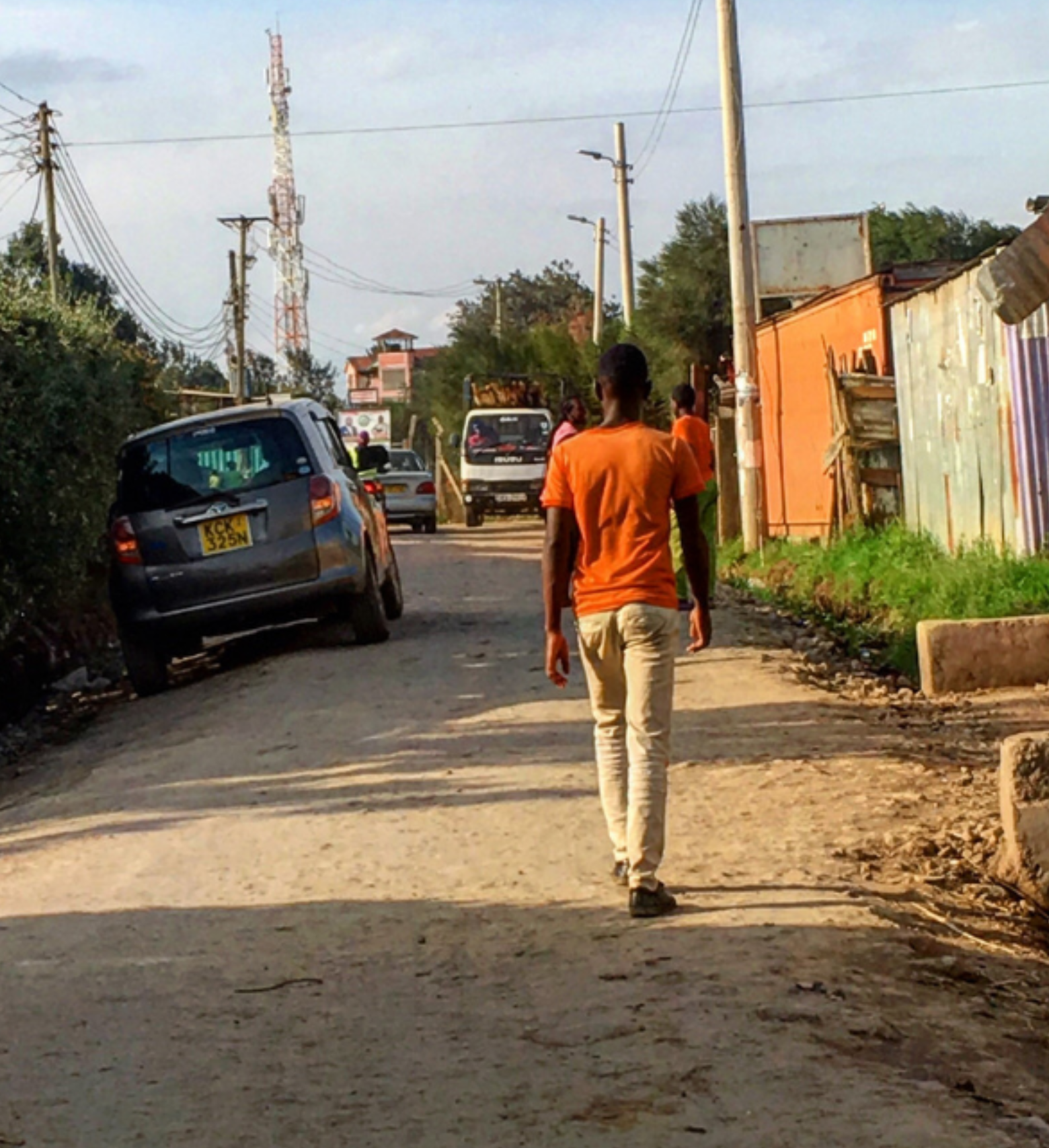


Women in Nepal
Home breadcrumb spacer About Us breadcrumb spacer

Impact

Fuel and Firewood Initiative

Ensuring safe access to appropriate cooking fuel

The collection, supply and/or use of firewood and alternative energies in humanitarian settings have been associated with a variety of harmful consequences including: rape and assault during firewood collection, environmental degradation and respiratory and other illnesses caused by burning of firewood and other fuels indoors.

In response, the United Nations (UN) set up the Inter-Agency Standing Committee (IASC) Task Force on Safe Access to Firewood and Alternative Energy in Humanitarian Settings, known as Task Force SAFE. The Task Force SAFE is co-chaired by the Women’s Refugee Commission, the World Food Programme (WFP) and the UN High Refugee Agency (UNHCR).

In November 2008, the Task Force approved the first-ever global guidance documents to promote safe access to cooking fuel in humanitarian settings. They help humanitarian workers decide on the most appropriate fuel to use in a particular setting and the responsibilities of various actors.

These global guidance documents have been endorsed by key U.S. government leaders

"I hope our work today and every day going forward will hasten the time when thousands of women around the world will be able to feel comfortable…to work outside their homes, collect firewood and water without fear,play with their children…enjoy all the blessings of life in freedom, peace, and security."

Hillary Clinton, Secretary of State opening remarks at the UN Security Council meeting in September 2009

"The [House Appropriations] Committee…welcomes the newly approved guidance produced by the IASC Task Force…and urges the Secretary of State to continue to work closely with the humanitarian community to ensure global implementation of the Task Force’s guidance.

U.S. Representative Nita Lowey, 18th Congressional District, in H.R. Report 111-187: State, Foreign Operations, and Related Programs Appropriations Bill, 2010 (June 26, 2009)

Promoting alternative stoves in refugee settings

The Women’s Refugee Commission is working with the World Food Programme on the Safe Access to Firewood and Alternative Energy in Humanitarian Settings (SAFE) initiative to provide specially designed, fuel-efficient mud stoves to more than 100,000 women in Sudan and 35,000 women in Uganda. The program aims to reach up to 6 million refugees, internally displaced persons and returnees in 36 countries.

"Women and girls should not have to risk their lives and dignity…in the simple act of trying to cook food for their families. The SAFE stoves launch will help protect them and the environment with practical and urgently needed solutions.”

Josette Sheeran, Executive Director, World Food Programme

Detention and Asylum

Protecting unaccompanied children

Every year, more than 8,000 unaccompanied immigrant children arrive in the U.S. seeking protection, freedom and safety from abuse, mistreatment, torture and human trafficking.

They come to the U.S. seeking its promise of a better life, yet thousands of these children—possessing limited education and English skills—become lost in the bureaucracy of the immigration system and wind up traumatized and impoverished.

As they go through the immigration system, they face trained government attorneys and judges alone, since the U.S. government provides no appointed counsel for unaccompanied children in immigration proceedings.

Influencing policymakers at the highest level

In 2003, our advocacy led to the Division of Unaccompanied Children’s Services (DUCS) of the Department of Health and Human Services, a social services agency, taking over custody of unaccompanied children from the Immigration and Naturalization Service (INS), which acted more as a jailer than a caregiver.

Our follow-up report in 2009, Halfway Home: Unaccompanied Children in Immigration Custody, revealed that the treatment of most unaccompanied children had improved immensely because of our efforts.

"The first thing I did when I came into this position is read your report, Halfway Home."

Eskinder Negash, Director, Office of Refugee Resettlement, U.S. Department for Health and Human Services

Ending the detention of families

In 2006, the Women's Refugee Commission was the first nongovernmental organization permitted to visit the T. Don Hutto Residential Center (a former medium security prison located in Texas) where immigrant parents, with their children, were detained pending appeal to the courts.

Our resulting landmark report in February 2007, Locking up Family Values: the Detention of Immigrant Families, revealed the inhumane prison-like conditions in which families were held.

The report was a catalyst for lawsuits filed by the American Civil Liberties Union (ACLU) against Immigration and Customs Enforcement (ICE) on behalf of several detained children at Hutto. We shared our findings with the ACLU, providing critical evidence in support of their case.

Following our sustained advocacy efforts and the ACLU’s legal victory against ICE, the Department of Homeland Security’s announced its decision to end family detention at Hutto on August 5, 2009.

Reproductive Health

Ensuring access to emergency reproductive health care

The Minimum Initial Service Package (MISP) for Reproductive Health in Crisis Situations—a coordinated set of priority emergency interventions that can prevent excess maternal and newborndeath and disease, reduce HIV transmission, and prevent and manage the consequences of sexual violence—has been adopted at a global level by thousands of practitioners.

The Women’s Refugee Commission developed the online MISP distance learning module, which includes a test to certify individuals with the knowledge and skills to implement these priority reproductive health care interventions.

To date, more than 1800 individuals (representing more than 200 organizations, including UN agencies, nongovernmental organizations and academic institutions) have passed the online MISP module post-test and are now MISP certified.

The Women's Refugee Commission has been instrumental in having the MISP recognized by and integrated into the new World Health Organization (WHO) Global Health Cluster guidance tools, the Inter-Agency Standing Committee (IASC) Task Force on HIV in Humanitarian Settings guidelines, the UN Office for the Coordination of Humanitarian Affairs (OCHA) Different Needs Equal Opportunities Gender e-learning tool and the Central Emergency Response Fund (CERF) Life-saving Criteria and Sectoral Activities Guidelines, which guide all CERF allocation criteria.

Livelihoods

Giving humanitarian workers the tools to develop effective livelihoods programming

In June 2009, we published the first-ever comprehensive livelihoods manual for use in humanitarian settings to aid practitioners in selecting appropriate livelihoods interventions for their target communities: Building Livelihoods: A Field Manual for Practitioners in Humanitarian Settings.

Some 1,500 print copies have been distributed worldwide, and many more downloaded from our website.  Development agencies worldwide are integrating our guidance into their programming

"This manual will be extremely useful to distribute amongst our team members, as we work extensively on livelihoods and economic recovery in the context of post-conflict reintegration."

United Nations Development Program, Bureau for Crisis Prevention

"Thank you much for this important report. It will be a key resource for programming and setting new research agendas."

Ministry of Gender, Labor and Social Development, Uganda

Livelihoods workshops empower practitioners in the field

We have organized a series of regional and country-level workshops to teach humanitarian workers how to create market-ready livelihood programs.

"Excellent. Extremely informative and challenging, but very practical."
"Enlightening! It made me realize that our programs could be strengthened by a lot of the tools presented in the workshop."

Participants in Livelihoods workshop, Nairobi, Kenya, Summer 2009

Making strides in setting agendas for gender-based violence programs

Our report Peril or Protection: the Link Between Livelihoods and Gender-based Violence, published in December 2009, investigates the relationship between violence against women and economic livelihoods, and makes recommendations on how to address this issue.

"This is a truly nuanced investigation of the issues and provides tremendous food for thought in terms of programming implications."

United Nations Population Fund

"This is such an important piece of work that the Women’s Refugee Commission has done. One of the findings—the ‘shallow linkage’ between access to livelihoods and reduction in GBV—is indeed an area that needs more research and documentation.
"In the current economic climate, women accessing livelihoods, seemingly at the expense of men, may put them at additional risk. So the corollary recommendation, that men need to be part of things like micro-finance and micro-credit programs, makes such good sense."
"My deep thanks to all at the Women’s Refugee Commission for the great research and thinking that you offer to the protection community."

Catholic Relief Services

Youth

Promoting tools to train displaced youth in marketable skills

In partnership with Columbia University, we developed a Market Assessment Toolkit to assist vocational training providers and youth in gathering information on local market demand and translating it into improved livelihoods programming.

In 2009, the toolkit was field tested in northern Uganda, and is now being requested by many operational agencies globally and referenced by donors, including the World Bank, as good practice.

The Norwegian Refugee Council plans to make the market assessment toolkit a standard component of its Youth Education Pack programs globally.

Rethinking resettlement services for refugee youth

Displaced adolescents, particularly those who are not in school or have never been in school, face heightened risks during displacement, including sexual and economic exploitation and voluntary or forced conscription. Yet this population group is overlooked and underserved by the humanitarian community.

In 2009, we undertook assessments in Liberia, Jordan and Phoenix, Arizona, and issued reports with recommendations on improving education and skills-building programs to fulfill the needs and expand the opportunities of young men and women.

Life in the Promised Land: Resettled Refugee Youth Struggle in the U.S. is vital for agencies working in Jordan and other host countries to understand the most essential needs of refugees once they reach their countries of resettlement.

"UNESCO will certainly take this into advisement for our School Readiness Programme for Iraqi refugees that we are in the process of launching now as well as other projects currently under consideration."

UNESCO Jordan

Disabilities

Remembering refugees with disabilities

The Women’s Refugee Commission produced the first-ever global research report on disabilities among refugees and conflict-affected populations, along with a companion resource kit guiding program practice on inclusion, equal access and full participation of individuals with disabilities.

Our research highlighted problems in the identification and registration of refugees with disabilities, which resulted in UNHCR changing its computerized refugee information management system to better capture the types of disabilities refugees had at the time of registration.

Providing critical guidance in the wake of disaster

In the aftermath of the Haiti earthquake, the Women’s Refugee Commission provided relief agencies working on the ground with key guidelines to ensure people with disabilities have access to services and are included in reconstruction efforts.

"I have requested that my colleagues include the important concerns you have raised in our evolving response strategy. Please allow me to reiterate how important I found your recommendations."

Catholic Relief Services